2 June 2019
In the beginning, there were Whales
The drawings and colors drew my attention. The concept aroused curiosity. The wish to add Portuguese to the most common languages around, in this area, led me to making contact. And the positive answer did the rest!
The Portuguese translation of the rules of Whales Destroying the World, a game by Petr Vojtech with the art of Jindrich Pavlásek, was the first formal collaboration in this fast-paced world of board game creation. Thank you, Petr!
It's been six months now.
And the collaborations already add up to twenty!
Translations into Portuguese, proofreading in English and Portuguese, comments and suggestions for projects at different stages of development.
Playing with different languages, in search for the best sense. Detecting inconsistencies, errors and typos. Making suggestions. Helping to tell a story. All in all, improving firsthand experiences.
Something I've always been doing over time, in my different lives. Something that I can now do in these territories, where I feel at home.
At first it was the whales. Then came other animals, like bees and chickens. But also, kilt wearing people. And adventurers and warriors with magical arts, in inhospitable lands. Imaginary kingdoms looking for a new sovereign. Merchants in the Mediterranean. The struggle for power in ancient Rome. The arts of calligraphy. The operation of computers. Football matches. Traveling through outer space.
Worlds created by people, who decided to face the challenge of creating the game they dreamed of and that did not exist yet. Worlds created by companies, some small ones taking the first steps, others well established in this market. Worlds disseminated by publishers.
Work that flies over borders, touching land in many points of our globe. From Portugal to Australia, the Czech Republic, Germany, Hungary, Italy, Mexico, Spain, the United Kingdom or the United States of America. For now!
Creating, together, within the reach of a click.
In December, it was the whales. Going backwards one month, you may find the first entry of this blog, in Portuguese and English. A time also marked by the setting up of a Twitter account, joining game-themed Facebook groups and recurrent visits to Kickstarter. Another month towards the past and you may witness the start of the blog launch countdown. And just a small step further back, the very idea of returning to the land of games.
Now, the journey continues.
19 May 2019
At RiaCon, Estarreja, Portugal
RiaCon provided some time travel, between a past, measured in decades, and a brand-new present time, just like all presents use to be.
Morning began with a scheduled reunion, after something close to 35 years (!), with Fernando Zamith, former partner and opponent in the official chess competitions of Braga district (Portugal), at the end of the 1970’s, beginning of the 80’s.
To mark the occasion nothing better than a match of Petróleo, a game of that very same time. The cover of the box and the characteristic board display on the table were the reason behind several "Wow, man! The Petróleo!! ", of whom was passing by and was familiar with this or other editions.
AThen it was time for Fernando to join the Catan tournament and, later, to the Vilar de Mouros sessions, a game of his authorship.
As for me, always with the camera ready to shoot, it was time for a leap in time, to one of the games of this 2019.
That’s how I was invited to join a table in preparation for Escape Plane, one of the recent games of Vital Lacerda.
After the heist, each one must try to recover the maximum of the stash, scattered throughout the city, delude the police in pursuit and reach a safe exit.
As companions of crime, and rivals in the escape, Olavo, Adriano and Sérgio.
Many choices to make: visit locations, collect money, buy protective gear, make contacts, divert attention, try not to get noticed, evade the police, watch the rivals, plan for the final exit, even when it will be in a place unknown at the start.
And the time that is so short!
Other critical decisions will be kept in hold to later in the game. Sprint for the exit or take a riskier approach, aiming for higher gains? To play safe or to risk it all? Ambition? Greed?
I managed to get out. Saved, but not unscathed. A few wounds. Some money in the bags. Far from the success of my fellow burglars.
In the afternoon, the travels across time and space continued. Now to the Brazil from the mid-nineteenth century.
On the table the prototype of Magnanimous, already in its final stages of development. Around the table, the author, Caetano Foschini, and Paulo, already in its second go at the game.
From robber, in the morning, to a land-owner Baron in the afternoon.
Here, the game is obviously different: manage resources, export goods, contain the Paraguayan war, gain political influence, make laws pass or fail, capitalize on the influence and capacities of ministers, and ascend, ascend on the nobility scale.
With cards and dice, lots of dice, to use without rolling.
In the meantime, some conversations, a glance at the well-filled tables, the games on display, the first or secondhand sales, the raffles.
And photographs. Here are some.
| Zauberei |
| El Grande |
| Tobago |
| Trickerion |
| On Mars |
| CO2, Second Chance |
| Wingspan |
| Crokinole |
Step in and leave your PAW print - Playing Around the World - and follow the PAW tag.
Send a photo of a gaming session, the game title, your name, city, country (and, if you feel like, a short sentence about the game and or a photo of the city) to gamesinbw@gmail.com.
5 May 2019
Voyages
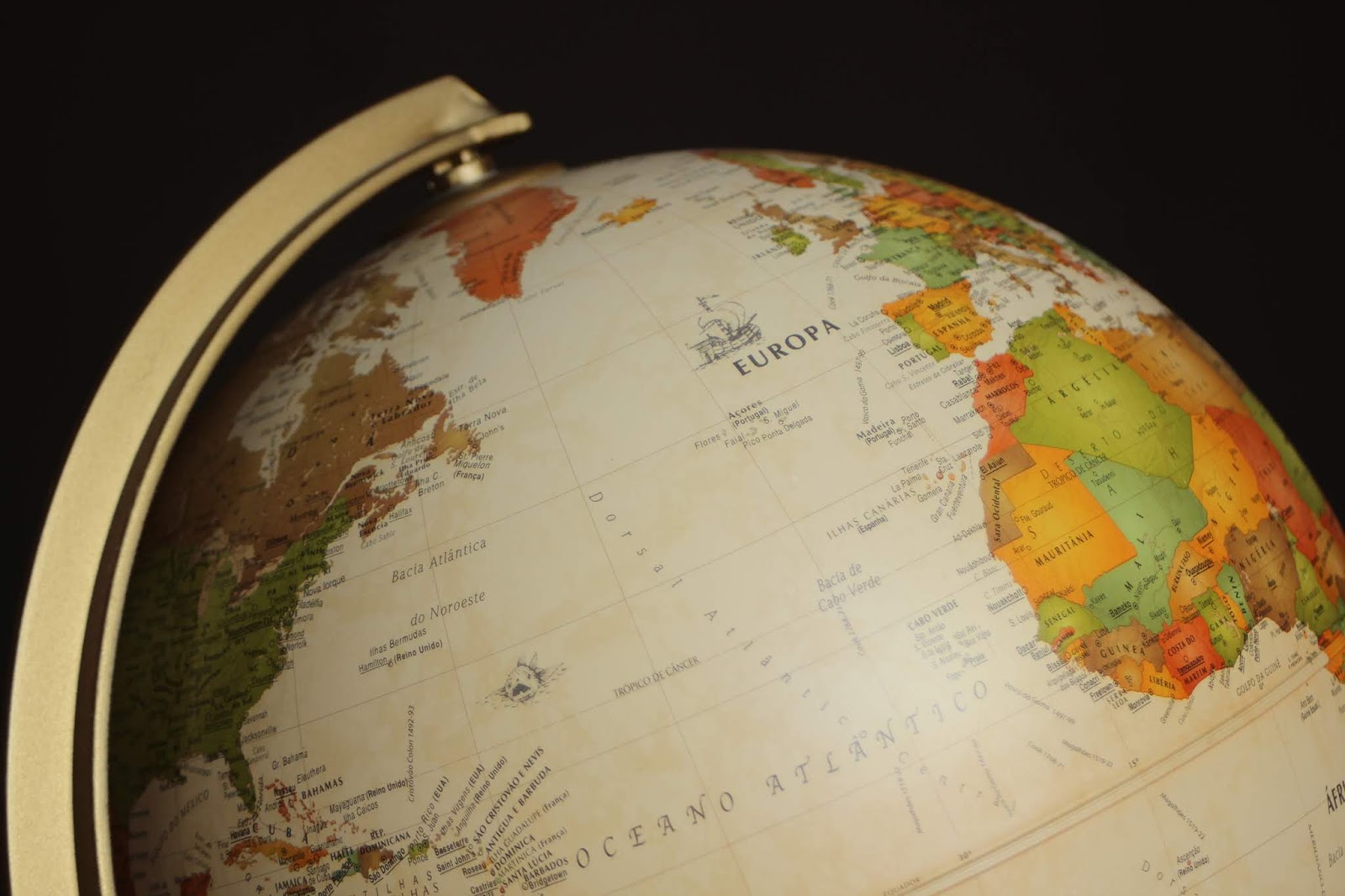
Let's start by traveling in someone else's memoirs, leading us to April 13, 1969:
On my sixth birthday I woke up to find the best present I have ever received. Next to my bed was an enormous globe – I had to rub my eyes to make sure it was real! I had always been fascinated by maps and geography, and my favourite childhood stories were those in which my father would recount the voyages of Marco Polo, Columbus and Magellan. It started with my father reading to me from Stefan Zweig’s Conqueror of the Seas: The Story of Magellan. Now our favourite game became tracing the journeys of these great explorers across the globe.
In How Life Imitates Chess (2007), published by William Heinemann.
And who reveals to us this dazzle by discoveries, by other worlds, by recreating adventures, by imagining and by playing, is the very one named Garry Kasparov, one of the best chess players of all time.
I can’t help thinking on this rather curious proximity between Baku, the capital of Azerbaijan (then part of the Soviet Union), and Guimarães, Portugal, at the end of the 1960’s. As well as noting the shared fascination with maps and geography, games and chess.
Maps that have served me, so many times, as improvised game boards.
Lines and dots. Roads and towns. Roads of red, green or yellow color. Allowing for different displacements rates. Large, medium or small settlements, allowing to accommodate more or fewer parts, assigning bonuses or penalties, being the starting point or the arrival one.
Boards.
For races across geography.
For simple alignments.
For chasing.
For battles.
With labels, customizing pieces from other games. With dice, for movements or for deciding confrontations. And with notebooks, to annotate positions, army effectives, results and dates.
For voyages to the taste of imagination.
30 April 2019
A matter of barrels
Early 1970’s. The man walks on the moon, to the pace of the Apollo missions. On Earth, man drives, to the rhythm of cheap fuel. The price of the West Texas Intermediate gently oscilates, just above $20.
October 1973. Syria and Egypt attack Israel, triggering the war of Yom Kippur. The U.S. supports Israel. The Arab Oil Exporting Countries decree an oil embargo. The price of oil shoots to 55 dollars a barrel.
https://www.macrotrends.net/1369/crude-oil-price-history-chart
Portugal, beginning of the 1970’s. The liter of gasoline costs about 7 escudos, the national currency of those times, a value that corresponds roughly to three cents of the euro. In 1974 it raised to 5 cents.
1973. The construction of a deep-water port, in Sines, with terminals for the reception of petrochemicals and natural gas products, among others, is just beginning.
Karto launches Petróleo (Oil), the game.
Oil. A well-oiled business, with recognized brands, and others less known. Some of them, under these or different designations, were once part of the Seven Sisters, who dominated the oil market in the first half of the twentieth century: Esso, Mobil, Shell, BP. They are joined, for the game, by Sonap and Sacor, precursors of Galp.
A business of millions, as seen by the notes value, ranging from 1 to 50 million of Kartos, the currency of a land not hard to imagine.
Millions, too, of tons of oil, in storage tanks of different capacities, and with different rentabilities. Assets include exploration permits, drilling towers, gas reservoirs, fuel trucks and, of course, oil tankers.
There are also cards, which will not be hidden up the sleeves, but on the hand and on the table, to set the course of action, trigger movements, condition the rivals. And tokens of possession, by each company, or marking a joint holding, together with the State or the bank.
Each card played allows, should there be money enough, to acquire new goods, to make new investments. But also, to move the marker along the side band, triggering events that will impact the next player, in a mechanism like the one used in Bolsa (the Stock Exchange), where there are no dice.
Purchase of exploration licenses or drilling towers. Payment of several taxes. Damage to oil tankers, accidents with tanker trucks or fires in wells. Drop in the price of oil. Confiscation of unused licenses. The dreaded nationalization of the assets or the longing for becoming, once again, fully private. You name it!
In addition, there is the possibility of auctioning the rights to acquire infrastructures, at the best price and hoping for the interest of several investors. And to make specific alliances, to better invest. Or even to join the bank, for acquiring an oil tanker.
At every complete turn of the board, every passage in the starting space, here called the Year Pass, it is time to raise income: 20 million for a 6 MT storage tank, 12 for each gas reservoir, 5 per tanker truck, 100 for an oil tanker. A lot more than what may be obtained at every lap in Monopoly.
Building up takes some time. First, you must obtain an exploration license. Then build a drilling tower to start the oil extraction. Finally install an oil storage tank or gas reservoir. Always adapting to the cards drawn, the bidding and, above all, doing the maths for the costs and revenues of each asset over time. And the landscape starts to change.
On shore, but also offshore,
where the cost of exploration licenses is lower and the cost of installation of drilling towers
is higher. But land space is scarce, offshore licenses are there for the take
and, of course, some oil magnates can't resist the marine calling!
A game that is
also a good platform for introducing new rules, to the taste of each, such as the
productivity of oil fields or the importance of the contiguity of
infrastructures.
A Karto product
from the 1970's. Made in Portugal.
22 April 2019
PAW in Chaves, Portugal
The Serra do Brunheiro, seen from Samaiões.
Just a few kilometres north, is the Tâmega River, the Trajano Bridge, the Termal Springs, and the city of Chaves, the Aquae Flaviae of the 1st century, name derived from the roman emperor Titus Flavius Vespasianus.
Signs of the empire that would come to pass before the Barbarians. Later came the Moors, afterwards the reconquest and finally the integration in the Kingdom of Portugal.
The inhabitants
lost the condition of Roman subjects, but they are still called Flavienses.
| Azul (Blue), from the arabic glazed tiles, and also from the ever present colour Foto by Leonor Conceição |
| Pandemic, cooperating to eradicate global epidemics |
Step in and leave your PAW print - Playing Around the World - and follow the PAW tag.
Send a photo of a gaming session, the game title, your name, city, country (and, if you feel like, a short sentence about the game and or a photo of the city) to gamesinbw@gmail.com.
14 April 2019
A tale of Word Placement and Dictionary Building
Homo Ludens and the rise of Homo Mechanicus. Meandering in the land of games.
Wandering. I listen to other travelers. I read the writings pinned onto these unfolded nets. The news of the day and the news of our times. About games, how they work, how they distinguish or resemble. In English. In Portuguese. In Portuguese mixed with English. Just like in computer science. Just like in other areas where we have chosen to be a foster family for new words arriving from abroad.
I read on a shining cover, of a game still to be, solitaire worker-placement. I hear newcomer walkers inquiring about the meaning of tile placement, set collection, or engine building. I observe a conversation of veterans of these lands, on the use of area control, the dynamics of press your luck, the interaction between players on an auction, or the moves provided by pick-up and deliver.
I consult one of the oracles, a reference site with a body of work that arouses reverence. In the index, no less than 53 mechanisms, sorted alphabetically, and explained. Beginning with the letter A, with acting, action/movement programming and action point allowance system, passing through deck building and point to point movement, and ending in the letters V and W, with variable player powers, voting and worker placement.
Terms strange at first. And shortly after becoming regulars.
I stop for a moment.
It crosses my mind that I had never realised the diversity of mechanisms behind board games, our unusual trend for cataloging stuff or how fast each tribe creates their own codes.
I'm still standing.
More importantly. I did not realised before the importance that mechanisms seem to have achieved, at least for some players.
Yes, there are types of games, or themes, that appeal more to some than to others. Storytelling, playing characters, developing abstract strategies, dealing with monsters, negotiating or taking part in past, present or imagined wars, undoubtedly attract travelers with different characteristics. Except for a few ones, who will try out whatever it may come!
Yes, for a creator, it is an integral part to reflect on the mechanism, or set of mechanisms, more appropriate to the concept under development, to the goal to achieve, to the story that will be lived by each player.
But...
Are we paying too much attention to the mechanics?
More than to the overall experience?
To a single part, more than to the whole?
To the means more than to the end?
Will it be me being more attentive to this language?
Will it be the effect of the multiplication of comments, announcements, analyses and critics?
Will it be a sign of this land and this industry reaching maturity?
After all, will this text be a mere exercise of Word Placement and Dictionary Building?
Meanderings.
7 April 2019
Back on the road
It has been six months since the first entry of this blog: D-30, the start of the countdown to the blog launch. And a little more since the decision to return to the Land of Games, a place I never completely left. Mere discontinuities.
Six months. Little time on the scale of our time. Less still in the measure of times larger than ours.
Six months. So little on the scale of our time. Less still in the measure of times larger than ours.
Six months. Wandering, discovering, rediscovering, exploring new paths. Time full, in which the least important are the numbers, that just tell a part of the story.
Six months. Wandering, discovering, rediscovering, exploring new paths. Filled time, in which the least important are the numbers, that just tell a part of the story.
Six months of writing, keeping up to the challenge of dual writing in Portuguese and English. Photographs. Old Games. Games played. New games for the collection. But also proofreading rule books, translations, comments, opinions and discussions. And above all, people! Other travelers in this world. Meetings. Meetings over the distance. Bridges. Links.
Six months. Time to open another front: back to game design.
Coming back, because I always have done it. Since BM age, Before the Meeples. At a time where raw materials came in the shape of Lego pars, stickers or numbers placed with tape, some six-sided dice, boards drawn on paper or cardboard and notebooks. An inexhaustible source for inventing games, making simulations, recreating competitions.
Return in a
different way: moving from an individual hobby and self-enjoyment, to something
"playable" by others, for others, for those who may want to try it, and,
who knows, even adding games to the collections of others.
Recover ideas accumulated over time.
Clarify objectives and concepts.
Develop mechanisms.
Test.
Seek the right balance.
Tune.
And repeat. And repeat. And repeat.
Back on the road, pedaling, symbolically, but not only! The season is in full swing, across continents. Behind is the Tour Down Under, Strade Bianche and Volta Ciclista à Catalunya. Today is time for the Ronde van Vlaanderen. Within a week, the mythical Paris-Roubaix. Soon, Il Giro, the first of the big three. Opportunities to observe, analyze, choose, compare.
Back on the road!
| Ready to go (1994)! |
Subscribe to:
Posts (Atom)