5 November 2020

Two years of encounters


It’s been two years since the creation of this blog. A starting point for a journey with no destination, and with no set direction, with games as route companions. In particular, those I own, some of which have been around for time long enough to be measured in decades, while others are newcomers. Wandering in the land of games.

For a long time, these were mostly worlds to explore and, as they say, (well) spend some time.  In solitary, with family, with friends. By then, I knew nothing about the creators of the said games. Many of the boxes did not even displayed their names. Best known were some publishers, such as Majora and Karto, here in Portugal, or Avalon Hill and JeuxDescartes, abroad.

Much has changed since then, as I have been discovering thanks to the bends and crossroads of this path of mine, and my desire to explore the emerging trails. From the blog, solo project, to occasional translations. From translations to proofreading. From proofreading to the analysis and suggestions regarding game rules still in development. Hence the writing of narrative texts, to enrich the stories beneath. From the rules to play tests, in which processes and balances are put to the test. Always moving upstream in the development process, meeting the creators.

The number of contacts increased quite rapidly. Some of them mere one-offs, others regular ones, some others half-way in between, undefined, waiting for this story to unfold. Those collaborations that stem from the mere will to contribute, proper to the hobby spirit, now coexist alongside professional collaborations. 

Games now have people behind them, and at their forefront. So many people, with their own history, projects, dreams, challenges, anxieties, difficulties, with similar or radically different paths. People. 

To list them all is a risky business, because I may forget some ... Not least, since they have grown in numbers! But it is a risk worth taking! And so, follow a list of people and companies with whom I collaborated, or have been collaborating, in one way or another. 


David Mendes - Pythagoras Games            José Antonio Garrido - MasQueOca

                             Gil d'Orey - MEBO Games                Orlando Sá

                Mateusz Kupilas              Francisco Álamo - Maldito Games

Paul Grogan - Gaming Rules                      Colin Webster                     Pablo Garaizar

                Martin Zeeb - Board Game Circus              Janice Turner - Wren Games

Chris Anderson - The BoardGame Workshop                     André Santos

        Pedro Kerouac             Petr Vojtěch - Time Slug Studio           Shayan  Sharks
  
David Liu - Moaideas Game Design                  Joel Bodkin                     David Digby  

           Andrew Bosley - Witts End               Przemek Dołęgowski - Lucky Duck Games
               
Caezar Al-Jassar - Alley Cat Games                 Matteo Gravina - 3 EMME

    Eric Francis              João Quintela Martins - Art and Games         Pedro Silva

             Fabian Fischer - Crimson Company            Jeff Beck - Uproarious Games
           
Dawson Cowals - Cohort VIII Games             Lukus Adam                     Robert Elliott

        Jonathan Gilmour - Pandasaurus Games            Steffen Rühl - Funtails

Scott James - Minerva Tabletop Games           Jordi SamRod - 2Tomatoes

                      Carla Kopp - Weird Giraffe Games                   Robert @StartPlayer  

                                       Wonmin Lee - Pegasus Games                Gottani                                   


At the same time, the participation in events were also increasing, joining scores of people around game tables, now shared with both acquaintances and strangers, players and designers, editors and organizers.

Invicta Con 2018 (Gondomar)

Leiria Con 2019 (Praia da Vieira, Leiria)

Ria Con 2019 (Estarreja) 

Invicta Con 2019 (Gondomar)

AFK Party (Cacia, 2020)

The meetings of Grupo de Boardgamers de Aveiro.


Then ..., well ..., then the pandemic arrived, with the ensuing trail of cancellations. The meetings were suspended, postponed, rescheduled; some reopened, just to close again. The games returning to more confined circles.

Well, not entirely. Some have been dematerialized, migrating to the now common digital platforms, or to the new ways of playing at a distance, where regular mail has long been replaced by video or chat systems.

It is true that it is not quite the same thing, not having the same proximity nor the relationship with the game as a physical object. But it is also true that it not only makes it possible to continue playing at a larger scale, but also allows encounters that would not otherwise be possible.

And that is how I participated in my first virtual convention, Virtual Gridcon, organized by Paul Grogan.


It's been two years since I headed for the land of games. 

The game collection continued to grow.

Another thirty or so worlds.

With people behind them.


Anachrony     Arboretum     Azul     Blackout Hong Kong     Castles of Burgundy

Cerebria     CO2 Second Chance     Codenames     Concordia     Counter Attack

Heaven and Ale     Istanbul     Jetpack Joyride     Just One     Kanagawa

Keyflower     Kingdom Defenders     Moon     Newton     Railroad Ink - Deep Blue 

Rossio     Sagrada     Saltlands     Santorini     Sherlock Holmes - Detective Consulting

Solenia     Star Wars Outer Rim     Suburbia     Takenoko     This Guilty Land

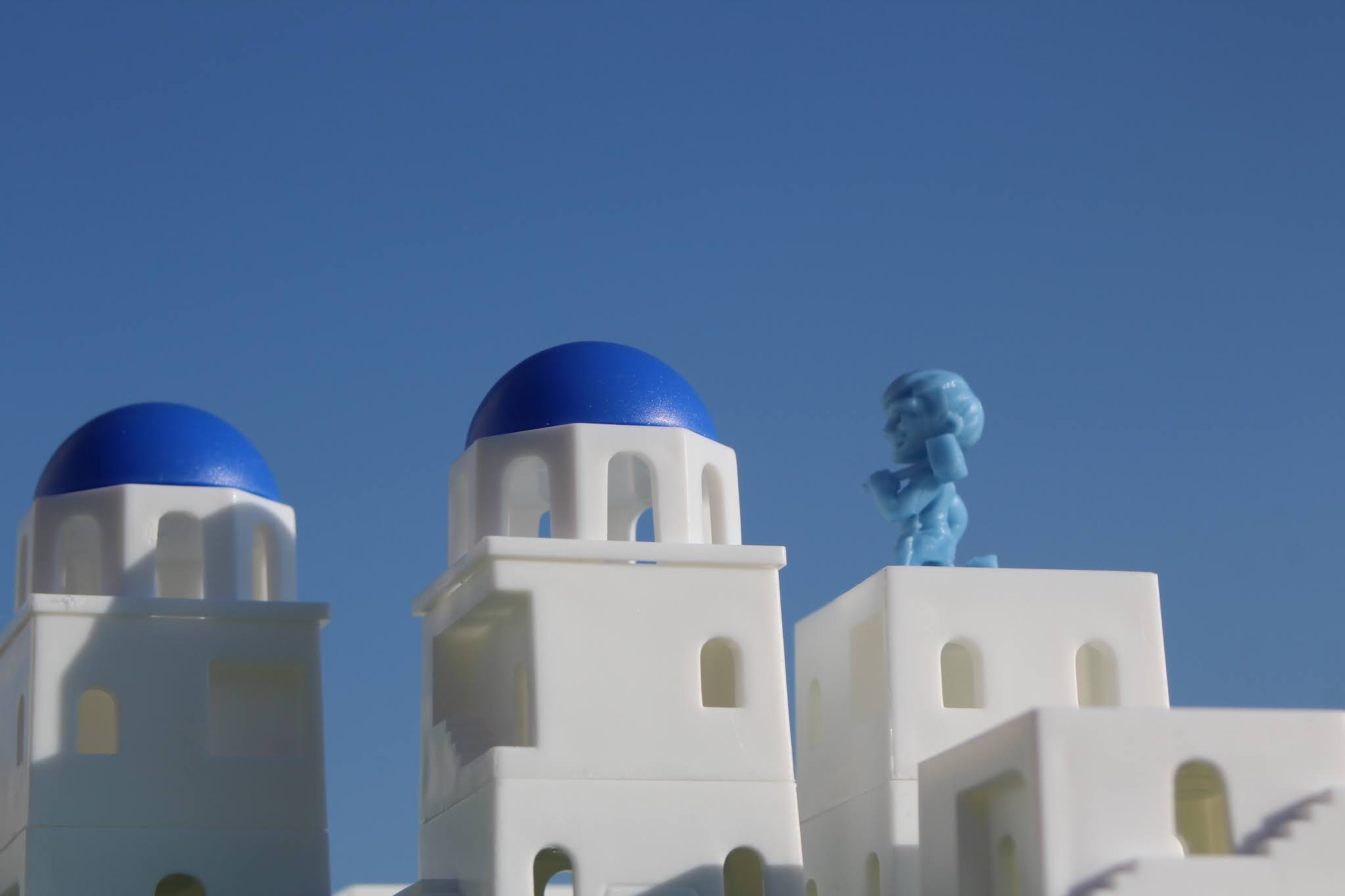
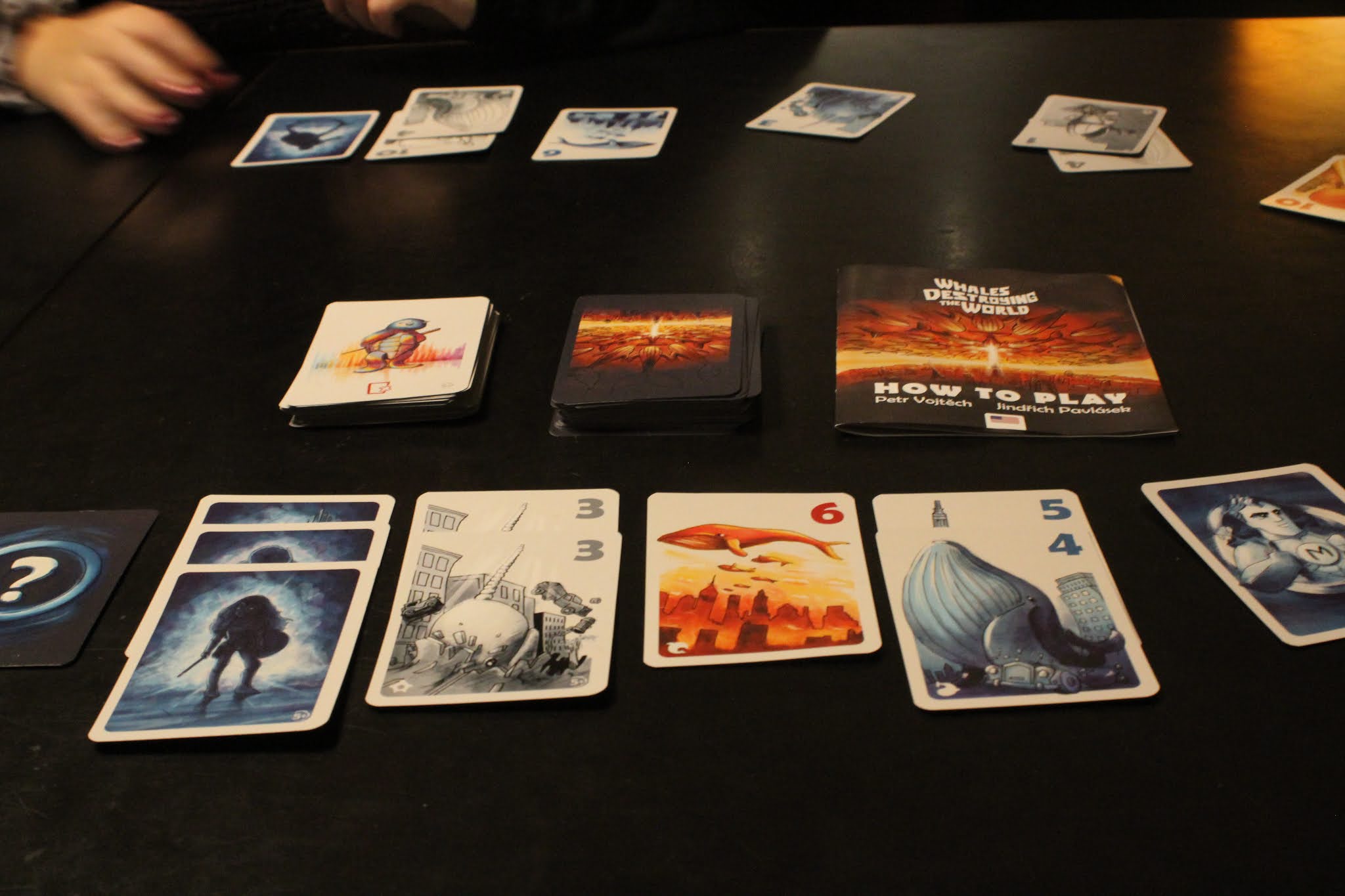
Tokyo Highway     Whales Destroying the World

24 October 2020

Six Pack - N.º 5 - In Black & White

Blackout Hong Kong
art by Chris Quilliams

 
Six.

The sides of a dice.

The sides of the hexagon.

Photographs without comments.

Gathered together under a common feature.


Squad Leader
art by R. Hamblen, R. MacGowan, W. Moores


Sherlock Holmes Consulting Detective
art by R. Edwards, S. Goldberg, G. Grady


Concordia
art by Marina Fahrenbach


Saltlands
art by Bazsó Lossonczy


Takenoko
art by N. Fructus, Picksel, Yuio

17 October 2020

Sarah, your time ... starts ... Now!


“Suppose that time is not a quantity but a quality, like the luminescence of the night above the trees just when a rising moon has touched the treeline. Time exists, but it cannot be measured.”, in Einstein’s Dreams, by Alan Lightman.


Let me dive into the past for a moment. Bear with me, it will not take long. That is, assuming we can measure time. 

Late 1970’s. The war was cold. There was still a wall in Berlin. East and West were opposites. The chess board was a battlefield. After the mediatic match between Bobby Fischer and Boris Spassky, USA and the USSR, the confrontation found new lead players, the two K’s. Anatoly Karpov, with the whole soviet system behind, and Viktor Korchnoi, USSR defector, as the man facing the system single-handed. Post-game analysis was even broadcasted in Portuguese television, every other day!

As a chess player in his early teens at that age, I would have told you that time, at the board, was accurately measured. In seconds, minutes, hours, even days. Sometimes, in moves. You see, time was slower back then. Or so it seemed. The standard time control, in place for main competitions, was set at 2h30 for each player, to play the first 40 moves. Then, additional time would be granted to accomplish an additional number of moves. Games would even be adjourned, to be resumed in the following day.

I was no stranger to such long games! Even when, in some of them, the battle against time might be as a fierce as the battle against the opponent. Those final moments when the analog clock loudly ticks away the final minutes, the final seconds. Still a number of moves away from clearing the time control, legs shaking under the table, eyes darting over the board, brain operating at full speed, hands swiftly moving the pieces, the red flag on the clock rising, and increasingly menacing to fall, bringing the game to a sudden end.

Since then, time accelerated. The game remained the same, but not the duration. From two and a half hours to two hours, or to an hour and a half. Faster time controls became widely popular, thirty minutes to play an entire game, fifteen minutes, mere five minutes. Some of these already existed, others were brand new formats, with time increments and alike. And, yes, you may even play games starting with just one minute in each player’s clock! With enough knowledge and practice, you might even finish the game before time runs out!

Fast forward to 2020, back to the thriving world of boardgames and related content creators. Without much of a search, you will easily find a diverse palette of contents. Reviews, unboxings and even re-boxings, playthroughs, how-to, top 100, 50, 10 or 5, thematic recommendations, games for solo or for groups, eurogames and wargames, roleplaying games, presentations, discussions, round or polygonal tables. You name it. As videos, livestreams, blogs, podcasts, photos, posts, tweets and alike.

And, of course, contents with different time lengths. Take the videos as example. If you want to see a full playthrough of a complex game, count in for some hours of footage. Even more, if it includes a detailed rule explanation. Some comprehensive reviews are frequently in the range of twenty to forty minutes, or so. Going down along the time scale, you will find shorter reviews. Some in more or less three minutes, as stated in the 3 Minute Board Games opening titles.

Even faster, you will reach what seems to be the actual limit. A 1-minute presentation! That is correct, 60 seconds, regardless of game complexity, the time you will take to play it or even to read the rules! One minute to give you a glimpse of a boardgame and, who knows, spark your interest to find out a little more.

Welcome to Board Games in a Minute! The woman behind it, and in front of the camera, is Sarah Shah. Come take a peek behind the scenes, in this conversation, in much more than 1 minute.


How would you introduce yourself, in less than a minute?
Hi, my name is Sarah Shah! I am an attorney by day and board gamer by night! But I am also passionate about animal rights and environmental conservation!

For those who do not know, Sarah is an Elephant Ambassador. Why is that?
Because elephants are some of the most gentle creatures on the planet, but they are abused horrifically for various tourist industries, the circus, and logging. And of course they are poached for their ivory and even their skin. So they need our protection. They need us to raise our voices for them.

1-minute videos are all about delivering content in a short time, hence at an incredibly pace. Are you a “fast talker” in your daily life?
When I get excited I talk fast! Otherwise I talk at a normal speed.


When and how did you enter the board game hobby? Are there some defining moments along the way?
I entered the modern board gaming hobby in law school when some friends introduced me to Catan. A defining moment is when I moved to London and joined the London on Board meetup and was introduced to so many great games!

It is not always easy to maintain gaming habits along life. Do you now have a regular playing group?
Yes, I actually run a board game meetup in Ithaca! But we have been on hiatus since March due to Covid.


Cats and games, a classical connection. From laying inside the boxes, to observing humans doing strange things with boards, cards, and tiny pieces. From sleeping close by, keeping company, to taking part in the action, pushing the tokens until they fall to the floor. 

By the way, this is Dobby.


Where did the idea of such short reviews come from, and why 1 minute?
I had been on TikTok for over a year but never made a single video. I wanted to create videos on there and I knew I wanted the videos to be about board games. The limit on TikTok is 59 seconds. So that's how Board Games in a Minute came to be!


Can you name the game and date of your first 1-minute review made available on social media?
The first video was for Runika and the Six-Sided Spellbooks on April 20, 2020! I actually redid the video for that game since I wasn't happy with it looking back at it. It's my Awkward Guests video that got me noticed though, and I made that video on April 22nd.

Talk us a bit through the process of making these videos, from the selection to the actual sharing.
My goal is to make videos for every game I own. If people have requests, I try to get to those! Lately my selection has been based on the bookings I've received for videos. Then I learn the rules and play the game before I can actually make the video. I make the videos on TikTok, but then share them to all my other platforms (Twitter, Facebook, Instagram, and YouTube).

And is there a “standard” duration, or an approximate range, for the whole process?
Yes, it takes at least an hour to make a typical video. And that doesn't even include the time to learn the rules and play the game. Once I start making the video, I refine what I am saying as I go along. I also learn which components definitely need to be shown and which ones I can do without. I never write a script. So it can take up to 60 or more takes for difficult videos to get it just right.

Do you do it all by yourself?
Yes! Though I play the games with friends or family before I make the videos.

Viewed from the outside, this seems to have skyrocketed pretty fast! And you just mentioned the first videos were made in April 2020, just some months ago. Surprised by all the positive reactions? What are your feelings about this?
It happened SO fast, and it was all so surreal when it happened. I couldn't believe it when publishers started contacting me to send me their games! Several months later I still sometimes cannot believe that this is my life now! But I am very happy about it!

You seem to have drawn the attention of several established publishers. Is there already a queue of games waiting to be compressed into 1-minute? 
There is now a queue. I am fully booked until the end of November right now [this was late September]. I have about 13 videos due in just the month of October. I might need to start saying no to people who want me to make videos, because I do have a full-time day job as an attorney too.

Do you still manage to play them all (either before or after the video)?
Evenings and weekends are spent playing board games. My life is basically work and board gaming!


“The year had stood still in Autumn”, in The Autumn Land, by Clifford D. Simak.


This is Cascadilla Gorge, Ithaca, New York. All dressed up in Fall colours, not far from Cornell Law School. 


How does all this this impact your daily life and time management?
Time management is an issue right now. I am starting to get better at it. At first my schedule was all over the place. But now I decide exactly when I will make certain videos, and I feel less panicked that way when I set aside specific times to make them. I still need to get better about not checking my messages and email a hundred times throughout the day.


Looking forward, have you set some goals for Board Games in a Minute?
A current goal is to be able to talk about Lisboa in a minute, but I need to play it first! I recently had enamel pins and vinyl stickers of my logo made. So I am hoping to sell those to raise money for a better camera. I would like to improve the quality of my videos.

Are there any other boardgame-related projects in the making, or in the waiting room?
I have been working on creating my own board game for over a year now.

To wrap up, name 4 boardgames.
An “oldie” that sticks to your memory, or even that you still play now and then
Catan! It was my gateway into the world of modern board gaming, and for that I will always have a soft spot for it.

An animal (elephant or not!) themed game
Raccoon Tycoon! I bought the game based solely on the animal artwork, but I actually ended up loving the game, too.

The longest board game you played/enjoyed
Trickerion. That's a long one and I love it. It uses my favorite mechanic, and I love the theme of the game. It's such a beautiful game.

A board game you think: no way it will fit in 1-minute!
Lisboa! But I hope I can prove myself (and others) wrong.


And that is all for now, from Ithaca, New York. 
Using the punch line from Board Games in  a Minute: Check it out!

Thanks Sarah!

“The idea that time is counted in units of life advises, I repeat, to accept that the only thing one can do with time, is not to lose it (…).”, a free translation from “Memórias do Outono Ocidental” (Memories of a Western Autumn), by Adriano Moreira.

5 October 2020

At Rossio


A game new in the collection, which is also, literally, a new game, as it has just been released. In this occasion, and in contrast to what is more usual, the opening of the box did not reveal a new world to discover, in the form of boards and cards, tokens and rules. I did not have to discover it, at least not entirely, since I have already been there, and I have shared a small part of the way, during its making.

It all might have started even before I knew it had. At the time, it could have been just one more of those Facebook message exchanges, about games, the testing of ideas and prototypes and, if I correctly recall, my curiosity and interest in documenting the creative process behind boardgame designs. 

On the other side of the network was Orlando Sá, someone who I only knew by name, especially as author of Porto, a well-received game, both in Portugal and abroad.

As it frequently happens with so many of these interactions, no further development was in the horizon. I went back to the writings on this blog, the projects of rulebook translations and proofreading, the games, the search for partnerships. 

But this time, it was different. Later on, on November the 23rd, I received a message from Orlando, recalling that virtual conversation, and asking if I would be interested in take part in the tests of a brand new game, already in the final stages of development!

Needless to say, the answer was “Yes. Of course. For sure!”. A few questions and prompt answers were all it took to set the stage: the material required for the tests, the number of players, the desired focus, and the deadline to send contributions. 

And so, I jumped from Porto, which I have not played yet ... to Rossio. From North to South. From the Riberia’ facades to this main Square in Lisbon. In both cases, very Portuguese, thematically.

Afterwards, I receive the files containing the parts for the main board, the player boards, the cards and pieces, the rules. In versions yet to be finished, waiting for the illustrator’s work. Print, cut, and glue. Learning the rules. Discover the play flow, solo at first, since one of the objectives was to test the automaton that would serve as an opponent for one player games. Then, at two or three player counts. Record results, take note of doubts, identify difficulties, describe strategies, photograph positions, register scores, formulate suggestions. Send. Repeat. 

A collaboration that mainly took place during December 2019 and January 2020. Once completed, the rest of the design and production process followed its path. The formal launch event, and a face-to-face meeting, was scheduled for Leiria Con 2020. But in the meantime, the world was changing. Meetings were firstly suspended, then cancelled. The projects were rescheduled, across continents, not least because many bears the brand "Made in China”. 

Fortunately, it successfully crossed the finish line, and this game is now available in a store, with bookshelves, near you, or in a store, also with shelves, that you cannot see, but which is within reach of a couple of clicks. And Rossio is also here, no longer as a cardboard sketch version, but the real deal!


It is then, when we open the box, that we come across the master stonemasons, with beard and mustache, characters full of expression, with the life given by the trait of Olivier Fagnère. Four artisans, that are essential to draw the different motifs on the pavement, each one associated with a different colour, with different cost patterns and different values.


The main square is a space for everyone, and its pavement is jointly built by all players. But event in this communal space, the competition rules, you are in a race to be the best. Should you raise money or recruit stonemasons, which will enable you able to score valuable or repeated patterns? Should you do it early in the game, when the square is barely decorated, or wait until a later stage? Should you quickly enlarge the pavement or bet only on some features? Those are your choices, gentlemen.


It is a matter of breaking stone, managing money, choosing the location for each tile in the pavement, measuring time, taming ambition. There are small changes available, enabling you to customize the level of difficulty, suiting different tastes. In this square that increases in length to accommodate more players. For two to four persons.


We might even call in the noble ones, for those wanting to add a dash of diversity to the normal unwinding of the game. These are nobles without party, without preferred color, interested only in more or less far-fetched patterns.


And then, we meet Ross again, our opponent for solo play. It is unclear whether the name denounces a relation to the English aristocracy, whether it will be a derivation of “Ruço” (one way to refer to someone with blond hair in Portuguese), or a mere nickname. What you may take for granted is that he is a difficult opponent, so you would better start in the easiest levels.


Now you might want to give Rossio a try, this game designed by Orlando Sá, and edited by Pythagoras Games, Portugal, from the 2020 batch.

6 September 2020

From 18 to 88


The comic’s zine Tintin, which I regularly read during the 1970’s, had as motto “The magazine for young people from 7 to 77 years”. With some minor adjustments, this perfectly fits my last week of August, on vacation with the enlarged family! Firstly, let us replace magazine by games. Then, move the age interval forward, by about a decade, so to achieve a perfect match with the ages of all players present. The result: “Games for young people from 18 to 88 years”, which we could even extend for almost another decade, so to include the game observers!

On the table, a set of games added to the collection this very year, some of which were bought for the occasion, considering the type of games, the player count and this mixed group. 


Railroad Ink: Deep Blue Edition


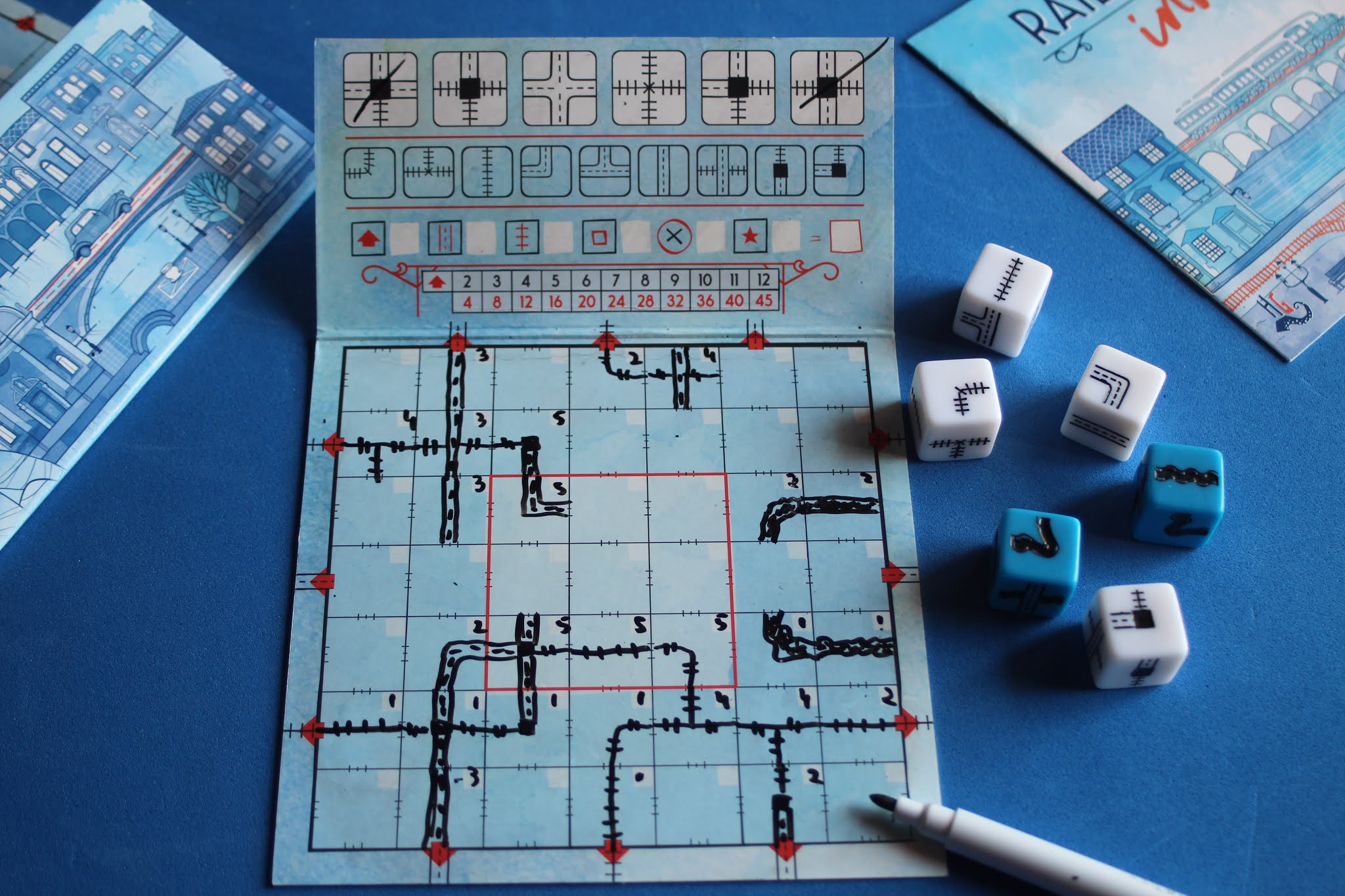
Let us start in shades of Blue, matching the colours of the sky and of the nearby waters. Railroad Ink – Deep Blue is a Roll and Write game, where you literally draw roads and railway lines. Your aim is to build the most valuable network, accounting for the interconnected exits, the longest routes of both roads and railways, the central zone occupation, and the unfinished stretches.

In each round every player draws the same basic sections, as determined by a roll of dice. On the dice faces, there are straights and bends, forks, overpasses, and multimodal platforms, enabling to link together roads and railways. And there are also additional special intersections, on a limited number, to use with restraint, so often to ensure that our network further extends and seamlessly interconnects.

This is, in reality, an individual game played in parallel, where there is no interaction between players. The starting point is the same for all, as are the dice to be used each round. What differs, is the way you use them. But it is surprisingly pleasant to play with other people, side by side, up to six players, scribbling down the routes on their own boards, choosing different aesthetic approaches, or attempting to maximize their endgame score. In the end, just erase it all, and start again, maybe adding another couple of dice, representing rivers and lakes.

Roll and Write games are ever more popular, in brand new formats and complexity levels. It is a kind of resurgence of dice, pencil, and paper games, but with an all-new touch, in terms of themes, mechanisms and materials. For all ages and for all players. And to play anywhere.


Just One


From drawing to word guessing, still using some of the base elements that lie at the heart of so many games across time. In opposition to the previous one, relying on independent and autonomous play, this is a fully cooperative game, bringing together up to seven players. The more words the group guesses, the best.

In each round, one of the players will be trying to guess one word, making use of the clues written by the other team members. But pay attention, each clue consists in a single word – Just One -, picked individually, without any conferencing whatsoever. And identical or similar clues, as those of the same lexical family, are removed, reducing the number of clues available for the guesser. 

To each one is own strategy! To choose obvious words, running the risk of duplicating clues, and hence eliminating them. To go for more complex associations, running the risk of a cryptic result. Hope for the clues of other players to give meaning for our own clue. Or even to pick a word which, we trust, will provide a special hint for the guessing player. The success rate on our seven-player group was pretty high! 

It is lots of fun to watch the associations unfolding, either providing clues or trying to guess the secret word, and it is very easy to understand why this game is already a success story, in so short time.


Codenames


Let us keep going on the word-guessing business, moving to another very successful game, now available in several versions. Well, my entry game in the Codenames universe was Duet, for two players, as the name suggests. This vacation we were up to the original Codenames, putting face to face, in competition, two rival teams. Who will be the first to find out all the secret spies? The blue team or the red team?

Each team includes a spymaster and several field agents. The spymasters know the secret grid, holding the key to what is assigned to each of the words on the table: a blue spy, a red spy, an innocent civilian, or the assassin. How to best convey this information to the field agents? How to avoid costly mistakes? How to beat the rivals? 

The main process is to find an association between words, the more the better, on positions corresponding to spies of their own team, and to provide a common clue – here again just one word -, together with the number of instances. For exmaple, “Animal 2” could be used to signal, on the above photo, Bear (Urso) and Unicorn (Unicórnio).

But it will not always be that simple! And as there are other words, one must avoid, at all cost, that our agents might be misled, and will point to civilians (an thus passing the playing turn to the other team), or to opposite spies (giving them the edge), or, in the worst scenario case, to the assassin (immediately loosing the game). Playing slowly and safe is seldom the solution because this is a race, and only one team will win.

We were eight at the table, a pretty good number, enabling lots of discussions inside each team. Lots of fun to play in a group, with a nice mix of competition between both teams, and of cooperative play within each one.


Kanagawa


This painting-themed game is already a recurrent one on our table. It undoubtedly has some appealing material: nicely illustrated cards, the playing mat representing the painting school, the master and apprentice tokens, and the tiny paint brushes.

Game play goes well with the theme. To spend longer time at school, obtaining more knowledge and techniques (more cards), or to put the knowledge into practice, choosing some elements before other players do so. To expand our painting, adding new elements, or to develop our atelier, as a preparation in advance for future rounds. 

Trying to incorporate more elements of a single season into our painting, going for the trees, for human portraits, animals, or buildings. Each option may pave the way to get diplomas, of importance for the final scoring. But beware! There is also room for ambition and dilemmas: it is possible to pass on a diploma, which will never get back again into our reach, in the quest for a more prestigious one. In the endgame, scoring is valued in harmony points.

A game that is simultaneously elegant, simple, and fast, providing enough choices to make it enjoyable, and with cards enough to ensure replayability. Better at 3- and 4-player counts, over 2, because of the added uncertainty related to the choices of each player, namely within the painting school card drafting.


Istanbul


A change of game style and place, and we find ourselves in Istanbul. I had listened to good things, really good things, about this one. And these first couple of games lived to the expectation.

The bazaar was crowded, as it is supposed to be, with five merchants in play (the maximum), totalling some twenty assistants, to spread all over the place only to meet them again later on, plus some family members, alternating between freedom and time in prison, and a governor, and a smuggler.  

Sixteen different locations, each one enabling different actions, with quite original ones, from mosques to the sultan’s palace, from the post office to the police station, the markets, the fountain, the warehouses for spices, fruits, and fabrics, or the luck games around the table for tea. 

An action-packed game, where each turn goes by in a blink, and where what matters is to find the fastest road to the rubies.


Backgammon


An holiday without at least a backgammon match would be a very rare occasion. This set is, for sure, my most travelled game, having visited many locations in the span of some decades. And it is usually packed together with a set of poker dice and two decks of cards!

You may learn here the backgammon basics.


And this is how it went, part of a week into the Blue!


2 August 2020

Welcome to the Grid!


Enter the Grid! Well, this is neither Tron nor Matrix, even being somewhat related to an inside-the-machine kind of world. This is about an event, in our world, one where we are already heavily connected by machines, extending our reach, overcoming barriers, redesigning frontiers.

“Welcome to the Grid!”. These could have been Paul Grogan’s words to the attendees of Virtual Gridcon, his very own boardgame convention, held from 26 to 28 June. This year's edition had to go online, from Devon to the world, due to this virus that is haunting us all.


Before entering my convention account, let me just mention a side event of great significance. Paul promoted a charity raffle to support the Chrysalis Youth Empowerment Network, a UK based charitable organisation operating in Uganda, contributing to the development of young social entrepreneurs from remote rural and disadvantaged slum districts, now facing an even greater challenge (learn more about the Butterfly Project at https://cyen.org.uk/). Over 100 games were donated, by designers and publishers, and more than 500 supporters joined the cause, raising 10.000£ in the process! And, as a plus, there was a live stream, connecting Devon to Uganda, for a tutorial and playthrough of Under the Falling Skies with two of the teenagers in the Chrysalis Project. Have a look! 


Now back to my Gridcon.

To be fair, I did not very well what to expect. You see, I am not a big fan of playing boardgames online, be it using one of the many platforms now readily available, such as TableTopSimulator, Tabletopia or BoardGameArena, or even relying only on Skype or Facebook. It is true that voice over applications, cameras, and chat rooms, enable you to get closer to people, but it just is not the same. The full view of a board on the table and the display of cards and tokens, is replaced by a small screen (yes, I might need a bigger one!); the touch and the actions are replaced by mouse pointers and a number of controls; and there is no one sitting next to you! On the other hand, it is the only way to play with people from across the world. And, of course, I would not be writing these lines, would it have been just another regular physical convention!

For this first online convention, I mostly chose games yet to be, in quite different stages of development.


Numbers Station, photo by Robert (Twitter)


I started on Friday late afternoon, joining Robert, the designer of Numbers Station, for a tutorial and two player game. Rooted on Intelligence and Espionage affairs, the game derives its name from shortwave radio stations broadcasting numbers, only of meaning to knowledgeable ears on the other end. In Numbers Station we are on the intel business. Managing assets, electoral meddling, jamming signals, deploying spies. Sounds familiar? Looking forward seeing the latest developments of this one!


Void Zone, photo by Robert Elliott (BoardGameGeek)


Saturday was the main day: four games and a half on the menu, to fit from 10 am to around 8 pm!

First, a 3-way game of Void Zone, an abstract game of territorial combat and player elimination, designed by another Robert, Elliott. I do love abstract strategy games, there is always such a familiar feeling! In this one, the available area is constantly shrinking, in combination with a need for accurate energy management and movement selection, pushing for fast and decisive action. Void Zone rose to the occasion.


Coal Baron, photo by Dong Hyuk Song (BoardGameGeek)


From outer space back to earth, to the deep coal mines of Germany, such is the setting of Coal Baron. This is a game from 2013, by Michael Kiesling and Wolfgang Kramer, the only non-demo game I played during the weekend. Manage well your miners, how deep you want to go down each time in the shaft, the demand for different resources and the required transportation to your clients. Paul and David proved much more efficient on this one, fighting neck and neck to the end, while I went for lower value combinations! A new and fun learning experience.


Swatch, photo by Scott James (BoardGameGeek)


After a short lunch break, it was time to swap the dark mine galleries for the vibrant scheme of colours: let us move into Swatch, from Scott James and Minerva Tabletop Games. We were 3 at the table, gathering basic colours, mixing them up, and vying to complete scheme colours before the competition. Fast to learn, fast to play, with subtleties enough, and a clean and appealing look. Seems ready to hit the market!


Intrepid, photo by Timofey Bokarev (BoardGameGeek)


Then, back to space again. Well, close ... did not make it on time to the launch pod, as I was still mixing colours... So, I was left behind, observing the others joining the International Space Station, and trying their best to survive. Intrepid, by Jeff Beck and Uproarious Games, is a game where you, as an astronaut onboard the ISS, have to cooperate with astronauts from other nations, each one with their own abilities, to keep the support systems running, generate enough resources, and avoid the destruction of the ISS by a series of impending disasters. This is a more complex game, with great potential, and dealing with one of my favourite themes: space exploration. Would love to give it a try! With over 270.000$ raised on Kickstarter, Intrepid is due in early 2021.


Eternal Palace, photo by Alley Cat Games (BoardGameGeek)


The day came to a close with a demo of Eternal Palace, into the far east, a game by Steven Aramini, to be published by Alley Cat Games, and demoed on the occasion by David Digby. Paint your way to up to the emperor, by visiting different places around the Palace, obtaining and using fish, as well as a range of materials, rebuild monuments, collect favours. Lots of different ways to score. In all, a nice couple of hours, resulting on a tight finish over the last round! 


To end the list of games, Sunday was time to meet again double D, for a demo of his own Project S. Double D, for David Digby, a welcoming partner throughout all the weekend. S for the codename of the project under development, or double S, as in Still Secret. No spoilers. Suffice to say that this is another one I am really looking into seeing it again, further down the road!


There was also an opportunity to watch the Live Q&A with the designer Dávid Turczi, providing lots lots of insights into his work and to the market of boardgames, how hard it is to rely on this for a living, some cherished projects less well known as the main Mind Clash Games titles or solo modes, and also how to correctly pronounce his name (I think!). Still regret having passed, months ago, on the opportunity to get a copy of Days of Ire, from the man himself, on a FB chat, but, hey, I had to stick to my priorities.

And I finally ordered Anachrony, by Dávid Turczi, Richard Amann and Viktor Peter, published by Mindclash Games, thanks to a special discount during Gridcon. More from time rifts, paradoxes, and anomalies, soon on this blog!


A full and enjoyable weekend, thanks to all the dedication and hard work of Paul Grogan, and a few close collaborators, and of course to the fellow adventurers and to the creators of all these worlds. 

Thx, Paul!

15 July 2020

Summer List


30 degrees Celsius outside. Even more in most of the country, as usual. A warm wind blows. A taste of holidays, yet to come. And so, this is not a list of games that will hit the table on those days. It is a list with games still waiting to be, and with writings not yet written. It is a list of ongoing projects, for the weeks ahead.

  • A rulebook translation, English - Portuguese, for the other side of the pond and further inland.
  • A rulebook proofreading, in Portuguese, that will stay around here, in the Iberian Peninsula.
  • An enhanced storytelling approach for a rulebook, in English, that will travel to the East of Europe.
  • An interview for this Blog, at distance, establishing connection with the Big Apple.
  • A post for this Blog, celebrating an outstanding date, lying just around the corner.
  • Another post about a virtual convention, held some weeks ago.
  • A new game to learn, at last in my collection, dealing with Anachronisms.
  • And, in the distance, the promise of a new translation and of a prototype to test. 


Good stuff for the upcoming evenings, and nights!